
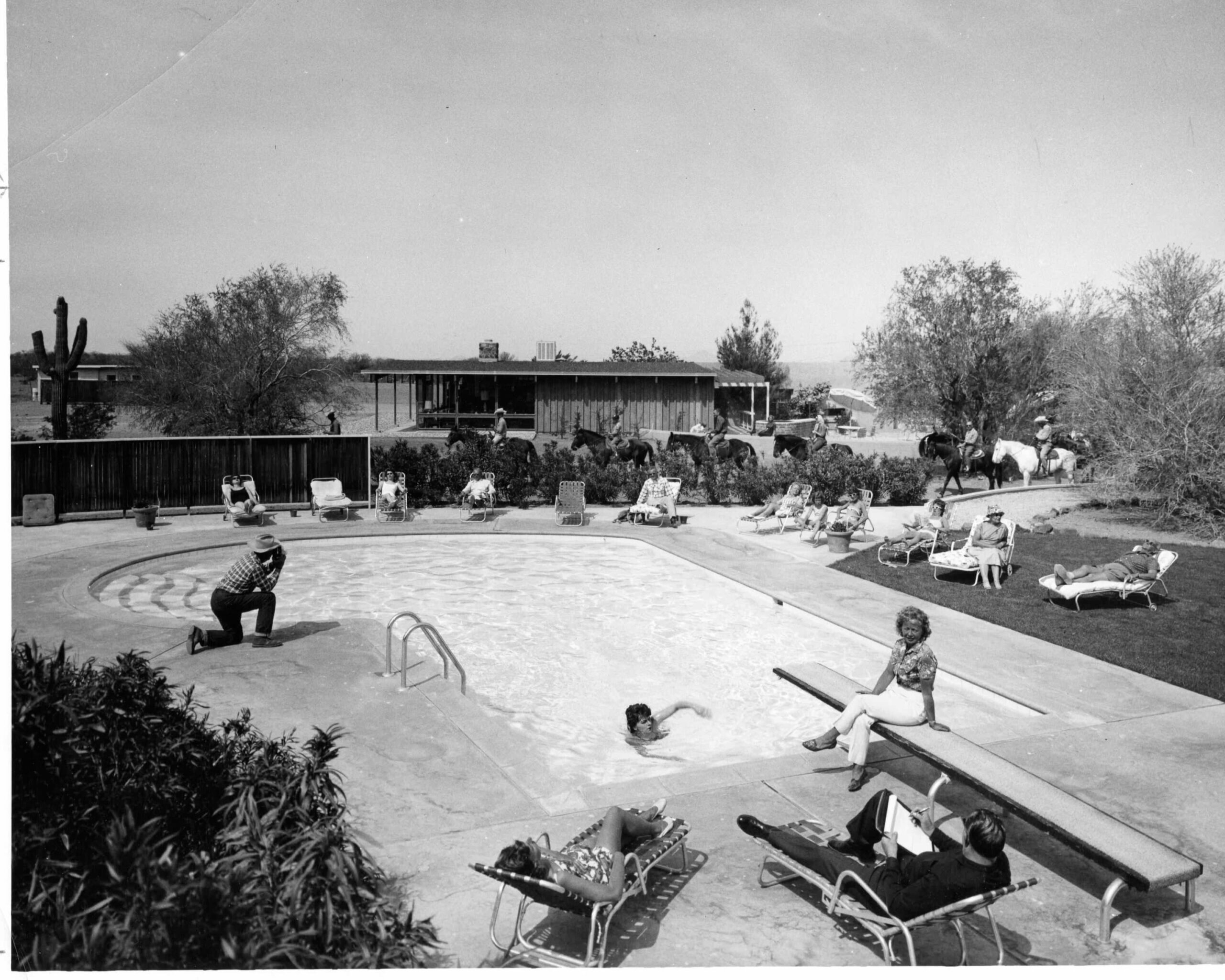
Today, summer at White Stallion Ranch means early morning horseback rides, afternoons by the pool, and guests from around the world experiencing the beauty of the Sonoran Desert.
But for much of the ranch’s history, summer looked very different. The gates closed and furniture disappeared beneath sheets. Curtains came down and dust settled over the lodge. What had been a bustling dude ranch for much of the year would quickly become quiet.
For Russell, the idea of a quiet ranch all summer long never sat quite right.
“I hated it,” he says.
The change didn’t happen overnight. There wasn’t one day when White Stallion Ranch simply decided to become a year-round operation. Instead, it happened gradually.
As more guests discovered Tucson and interest in dude ranch vacations continued to grow, the ranch began extending its season little by little. Maybe instead of closing in September, the ranch stayed open until October. Then a little longer. Then a little longer still.
Year after year, the season stretched.
What had once been considered the “off season” slowly became an opportunity. Guests were discovering that summer in the Sonoran Desert had its own appeal, quieter trails, dramatic sunsets, afternoon monsoon clouds, and a slower pace that felt different from the busy winter months.
Eventually, the ranch found itself doing something that would have seemed unusual decades earlier: welcoming guests all year long.
Today, rather than shutting down for the summer, White Stallion Ranch adapts to it. Activities begin earlier in the day, horseback rides take advantage of the cooler morning hours, and the ranch settles into a rhythm designed around life in the desert.
For decades, Tucson was known as the “Dude Ranch Capital of the World.” But back then, the season was much shorter than it is today.
“It was really about a six- or seven-month season,” Russell recalls.
Once the last guests departed each fall, preparations for the summer shutdown began. It wasn’t as simple as locking the doors and turning out the lights. The Arizona sun demanded much more.
“All the furniture was covered in sheets because our sun is so tough on stuff,” Russell says. “They would pull the curtains down, put sheets in the windows, oil the furniture, and do all this kind of stuff. It was a big ordeal.”
By the time everything was finished, the ranch barely resembled itself.
“The lodge looked like a horror movie,” Russell laughs. “Sheets over the furniture and dust over everything.”
Without guests in the dining room, horses heading out on rides, or wranglers gathering for the day’s activities, the ranch changed quickly.
“The ranch would very, very quickly turn into a ghost town.”
For Russell, that was the hardest part.
A dude ranch isn’t just buildings, horses, and trails. It’s people, stories shared over dinner, friendships formed on rides, and families creating memories together. Seeing all of that disappear for months at a time never felt right.
Thankfully, times changed.
The sheets are gone. The lodge is full of life. And if you ask Russell, that’s exactly how it should be.